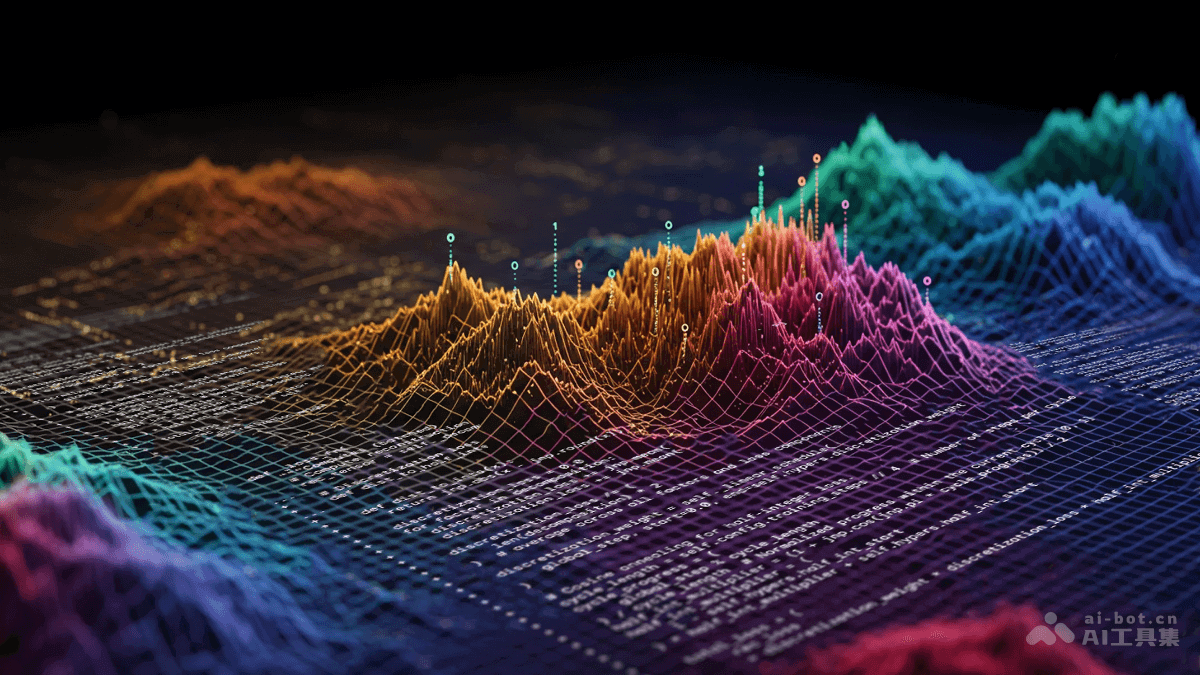
We have our radio knobs (Weights) and we have our scorecard (Loss). But if you have 1,000 knobs, you can’t just guess which way to turn them. You need a compass. Today, we’re talking about the Gradient—the mathematical tool that tells the AI exactly which direction is “downhill” toward a better score.
The Analogy: The Mountain in the Fog
Imagine you’re standing on a foggy mountain peak. Your goal is to reach the warm cabin in the valley at the bottom.
- The Fog: You can’t see the cabin (The perfect answer).
- The Slope: You can feel the tilt of the ground under your boots.
- The Gradient: This is the measurement of that tilt. It tells you, “If you step this way, you go down; if you step that way, you go up.”
The “Step Size” (Learning Rate)
Even with a compass, you have to decide how big of a stride to take. In AI, we call this the Learning Rate (lr).
- Too small: You’re taking baby steps. You’ll be on that mountain forever.
- Too big: You’re leaping blindly. You might jump right over the valley and end up on a different mountain entirely!
Back to the Code
Remember back in Video 1 when we added requires_grad_() to our tensors? This is the moment that payoff happens. Because we tracked the history of our “atoms,” PyTorch can calculate the gradient for us automatically.
# The "Magic" button
loss.backward()

# Now our coeffs have a "compass" attached to them!
print(coeffs.grad)
Note: The “Zero Grad” Mystery
You’ll see coeffs.grad.zero_() in my code. Why? Because gradients accumulate. If you don’t wipe the compass clean after every step, the AI tries to follow the directions from your last position and your current position at the same time. It’s like trying to go North and South at once—you’ll just get stuck!
Why This Matters
Understanding the Gradient is the difference between “guessing” and “optimizing.” We aren’t just changing numbers randomly; we are strategically sliding down the “Mountain of Loss” until our scorecard hits zero.
The gradient is what makes machine learning “learn” instead of just “guess.” It’s the mathematical compass that guides every parameter adjustment, ensuring that each step brings us closer to the optimal solution rather than further away.
In the next post, we’ll put it all together in the complete training loop and watch as our AI follows this compass all the way to the valley of perfect predictions.
This is part 4 of our AI fundamentals series. If you missed the previous posts on tensors, loss functions, and weights/biases, be sure to check those out first!
Let me know what you think in the comments, and stay tuned for the final video in this series where we run the complete training loop!