Most RAG (Retrieval-Augmented Generation) systems are built on a lie: the idea that slicing a document into equal-sized chunks and grabbing “Top 5” is enough. But when you’re dealing with high-density scientific literature—where a single paragraph on page 4 references a table on page 12—simple “flat” retrieval fails. The AI loses the forest for the trees.
In my latest project, the Seed Oil Research Analyst, I moved away from basic chunking to something far more powerful: Hierarchical Node Parsing and Auto-Merging Retrieval.
The Architecture: Forest, Branches, and Leaves 🌳
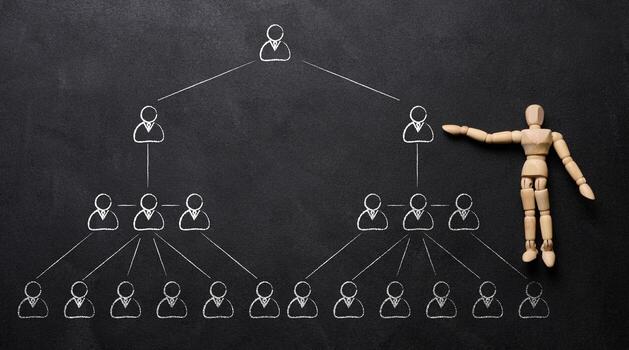
Traditional RAG treats your data like a deck of cards spread randomly on a table. Hierarchical RAG treats it like a family tree. Using LlamaIndex, I implemented a structure that captures both the “big picture” and “fine details” simultaneously.
- The Parent Nodes (The Forest): We define large chunks (e.g., 2048 tokens) that capture the overarching context of a study’s methodology or conclusion.
- The Child Nodes (The Leaves): Each parent is broken down into much smaller sub-nodes (e.g., 512 and 128 tokens). These are what we actually index in Pinecone.
- The Auto-Merge Trigger: This is where the “intelligence” happens. If the retriever finds that 3 out of 4 “child” nodes are relevant to your question, it doesn’t just send those tiny fragments to the LLM. It auto-merges them back into the original Parent node.
The Benefit: You get the surgical precision of small-chunk retrieval with the deep, narrative context of a large-chunk response. No more “choppy” answers that miss the point.
Parsing Un-Parsable: LlamaParse & Scientific Data 🧬
Scientific PDFs are a nightmare for AI. They have multi-column layouts, complex tables, and footnotes that break standard text extractors.
For this project, I integrated LlamaParse. Instead of just “reading” text, it uses vision-based models to understand the layout. When a study discusses the oxidation of linoleic acid in a table, LlamaParse ensures that the table structure remains intact so the Hierarchical Parser can “see” the relationship between rows and the summary.
Thought Provoker: If a RAG system provides an answer based on a fragment of a study but misses the “limitations” section mentioned three pages later, is it providing an insight or a dangerous half-truth? This is why Contextual Integrity matters more than just “finding the right words.”
The Gatekeeper: Preventing “What’s Up” Hallucination 🧭
One of the biggest hurdles I faced was the “Tripping” effect. If a user asks a question outside the scope—like “What’s the weather?”—a standard vector database will still find the “closest” match, even if it’s only 20% relevant. The LLM then tries to force that 20% match into an answer.
To solve this, I implemented a Similarity Gatekeeper:
- The Score Threshold: I set a strict cutoff (0.75+ similarity). If the vector search doesn’t find a high-confidence match in the peer-reviewed library, the system triggers a hard stop.
- The Result: Instead of “hallucinating” a link between weather and seed oils, the system politely stays in its lane. It transforms the AI from an “eager-to-please” bot into a reliable Technical Analyst.
Final Reflection: Math vs. Meaning 🌐
Building this project taught me that “Intelligence” in RAG isn’t just about the LLM you use (like Llama 3 or Groq); it’s about the plumbing.
- State Management: Using Chainlit, I had to ensure the UI was “locked” until the complex hierarchical tree was fully loaded into memory. Async programming isn’t just for speed—it’s for user trust.
- The Responsibility: When we build tools that summarize medical and scientific data, “close enough” isn’t good enough.
We are moving into an era where AI must show its work. Between Auto-Merging for context and Similarity Cutoffs for honesty, we are finally moving the needle from “Generative AI” to “Explainable AI.”
Challenge: If you were building a research assistant, would you prefer it to be “creative” and fill in gaps, or “rigid” and refuse to answer without 100% certainty?